
C-Suite Leadership Programs: What Actually Cascades Strategy
Every few years the enterprise rips off the last strategic plan and pastes on a new one. New deck, new priorities, new org chart on a slide. Everything is different and nothing changes. The leaders nod, return to their functions, and run the business exactly as they did the quarter before.
That is the real problem C-suite leadership programs have to solve. Not whether your executives are smart — they are. Whether they can take a strategy off the page and cascade it into aligned action across an organization that does not naturally align. Here is what actually makes executive leadership development work, and why most of it does not.
Why Most Executive Development Fails to Change Anything
The default format is a faculty expert and a deck. Executives sit, absorb a framework, rate the speaker highly, and fly home. Thirty days later the framework is a memory and the business runs unchanged. Senior leaders are the most expensive audience in the company to put in a room, and the lecture format wastes them — because insight delivered passively does not survive contact with a Monday.
What changes behavior at the executive level is not better content. It is a different design. Four things separate the programs that move an enterprise from the ones that produce a nice offsite photo. The same split shows up in how a senior team spends its time together.
1. Participant-Driven, Not Expert-Distilled
The famous-consultant-at-the-front model is the most common and the least durable. Leaders leave inspired and revert inside a month, because nothing was installed — it was described. Participant-driven development flips the room: the executives do the work, make the calls, and practice the behaviors inside the experience. The facilitator designs the conditions and reframes the conversation as it happens. What leaders build themselves, they keep.
2. Fewer Slides, More Immersion in the Business
A slide can explain alignment. It cannot make a leadership team feel the cost of misalignment under time pressure. Immersion can. When executives are dropped into a high-stakes experience where the only way through is to lead as one team, the lessons attach to something their brains keep — because it happened to them, not to a case study on a screen.
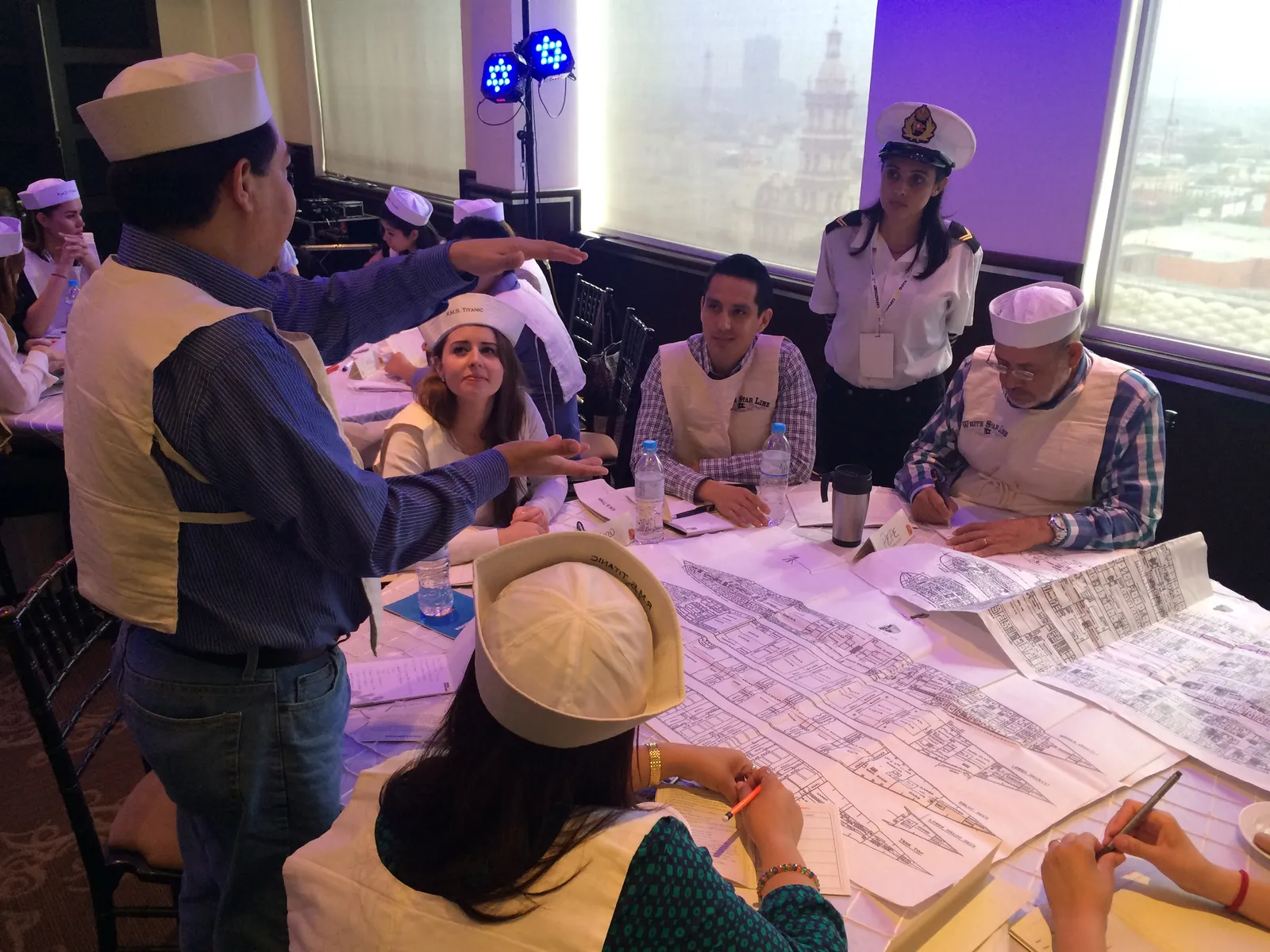
The proof of how completely immersion takes over shows up in the room. When Nokia's senior leadership team ran Save the Titanic, they stood the entire experience — never sat down once. They were so immersed in the time pressure, so locked into saving the ship together, that sitting never occurred to them. And when it ended they did not break for the afternoon. They stayed on their feet and applied what they had just lived straight to their own business, while the experience was still in their bodies. No follow-up memo could manufacture that.
3. Generative Conversation That Cascades
The highest-leverage thing executive development can produce is a generative conversation — leaders seeing the big picture together and aligning their strategies in the same room, in real time. When that happens, clarity cascades. Each leader carries an aligned version of the plan back into their function, and performance improves down the line because the people executing finally heard the same story from the top.
The clearest example was a global meeting of CEOs from across Ricoh, who worked in teams to save the Titanic. In the debrief they practiced the Yes-And skill — building on each other's thinking instead of defending their own. The conversation became so generative that they canceled the planned afternoon session entirely and stayed in application mode, turning the energy directly toward transforming their businesses. That is what a designed experience unlocks that an agenda cannot: leaders who would rather keep building together than sit through the next slot.
4. See Where Structure, Goals, and Process Support the Strategy
Strategy fails silently when the way the organization is built disagrees with the plan. The executive team commits to a direction the structure, the goals, and the day-to-day processes were never set up to deliver — and no one can see the gap because it lives across functions nobody maps together.
The programs that change enterprises make this visible. Leaders lay the strategic plan beside how the organization actually runs and look at where the structure, goals, and process support the strategy and where they quietly fight it. Seeing all three against the plan in one view is what lets a senior team redesign how the organization is built to deliver the strategy — realigning reporting lines, resetting the goals that drive behavior, and fixing the processes that decide what actually gets done — instead of announcing the plan and hoping the existing setup somehow carries it.
How Fortune 500s Cascade Strategy While Building Leaders
This is the design behind Lead the Endurance. Senior leaders step into the Shackleton expedition — a story of a leadership team that survived the impossible by staying aligned under conditions that should have broken them — and use it to practice the exact moves cascading a real strategy demands: making the call with incomplete information, keeping every part of the team rowing the same direction, and holding alignment when pressure pulls people back toward their own silo.
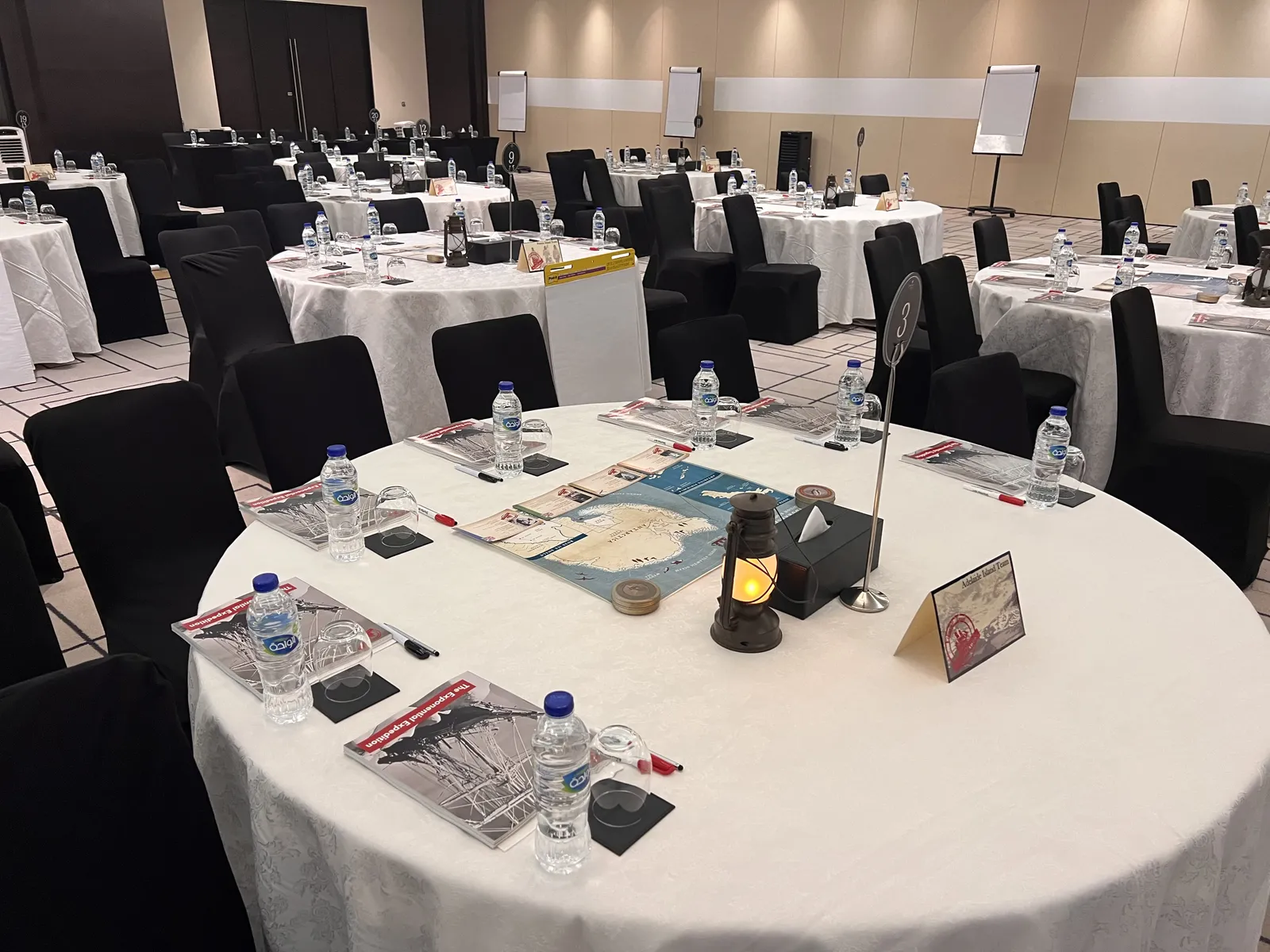
Fortune 500 enterprises run Lead the Endurance through partners like Duke Corporate Education and Korn Ferry — companies including American Express, GE Vernova, and Tractor Supply — precisely because it does two jobs at once. The cohort develops the leadership skills to implement, and the same room becomes where the business strategy gets cascaded and aligned. Development and execution stop being separate line items. The leaders who will carry the plan are the ones who pressure-test it together first.
What to Ask Before You Buy a C-Suite Program
Three questions separate a program that changes the enterprise from one that produces a good offsite: Do our executives drive the experience, or watch an expert? Does it immerse them in a real decision under pressure, or walk them through slides? And does it end with the strategy cascaded and the org structure aligned to deliver it — or with a deck nobody opens again? If the answer to any of those is the wrong one, you are about to peel off another band-aid.
Frequently Asked Questions
Why do strategic plans keep changing without anything actually changing?
Because the plan changes on the page but the organization that has to deliver it does not. The structure, the alignment, and the leaders' shared understanding stay the same. A new deck over an unchanged organization produces the feeling of change without the substance. Cascading and aligning the plan — not rewriting it — is what moves the business.
How is immersive executive development different from an executive offsite?
An offsite usually presents. An immersive program makes the team lead through a real decision under pressure, so the behaviors install instead of getting described. The Nokia and Ricoh leadership teams did not sit through their experiences — they were so engaged they reorganized their own afternoons around staying in application mode.
Can a leadership program really cascade business strategy?
Yes — when it is designed to. Programs like Lead the Endurance put the senior team in one room to align the strategy and practice the implementation moves together. Clarity then cascades down each leader's function, which is why Fortune 500s run it as development and strategy alignment at the same time.
Find out what your leadership team needs to align
Complete the 3-minute Learn2 leader survey. We will send back a short read on how to support your team right now and the development they most likely need next.
Get Leadership Insights
One email per week. Practical leadership ideas you can use immediately.
Related Articles
Trust Is the Retention Skill Leaders Never Learn (and the Cost Shows Up in Q4)
8 min read
Leadership DevelopmentMake Your Team the Case Study. How to Prove Your Leaders Are Ready for the Next Level.
10 min read
Leadership DevelopmentChange Management Leadership Certification: Building Strong Leaders
4 min read