
Gen Z and Leadership Development: Why Participant-Driven Wins
Your leadership development program lands with your senior leaders. It misses with everyone under thirty. The feedback says "engaging facilitator" and the behavior says checked out by the second module.
Gen Z is not broken and neither is your program's content. The format is the mismatch. This generation learned everything that matters to them by doing it — and most leadership development still asks them to sit and listen. Here is what works instead, and why the science says it works for every generation, not just this one.
No One Likes Being Lectured. Gen Z Just Refuses to Pretend.
Think about how a 25-year-old learned every skill they actually have. They watched someone do it, then tried it immediately. Guitar, code, cooking, video editing — watch, try, adjust, try again. The gap between seeing and doing was minutes, never weeks.
A lecture asks them to absorb now and apply someday. Their whole learning history says that is not how skills form. Older generations sat through it politely. Gen Z simply disengages — and honestly, the research says they are right. Lecture-based leadership development has always produced inspiration that fades inside 30 days. Gen Z just stopped pretending otherwise.
Participant-driven development flips the room. Participants drive the ideas, set the priorities, and practice the behaviors inside the experience. The facilitator designs the conditions and reframes conversations as they happen. Nobody gets lectured, because nobody needs to be.
Hands-On Means Applying It This Quarter, Not Someday
The fastest way to lose a younger leader is to make development feel separate from work. The fastest way to keep them is to make development BE the work.
That is the design behind High Impact Projects: each leader scopes a real business challenge, builds the solution with coaching and peers, and delivers a measurable result in 90 days. The learning installs because it is applied the same week it is practiced — the watch-try-adjust loop Gen Z already trusts, pointed at your business.
The results are not junior-sized. At RBC, participants designed their own workflow fixes and delivered a 2100% return on the first project. Younger leaders do not want easier work. They want real work, sooner, with their name on it.
Story Is the Retention Engine
Gen Z grew up inside million-dollar storytelling — streaming series, cinematic games, creator content with real production budgets. Their attention has a high floor. A slide deck does not clear it. No deck ever will.
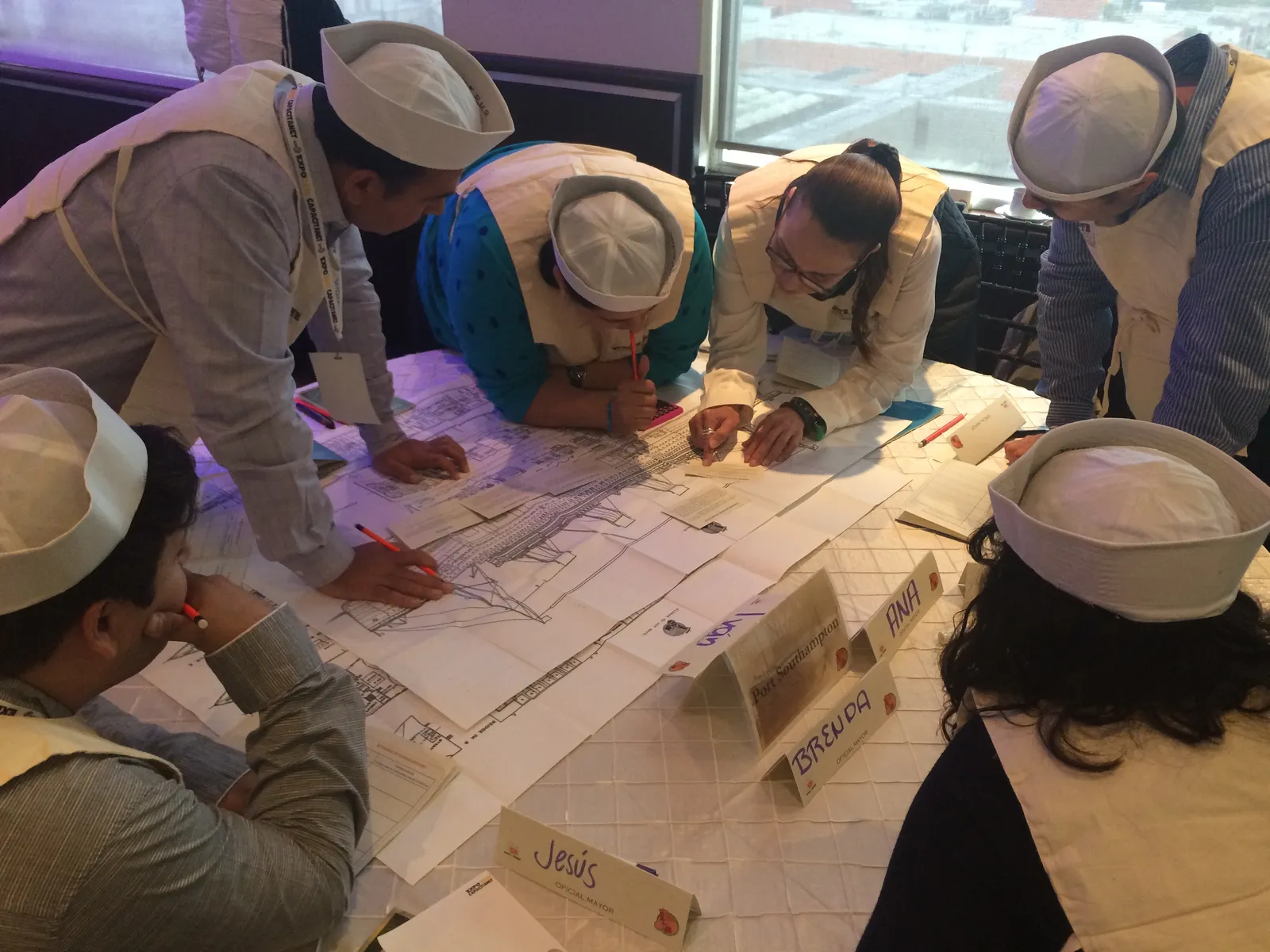
Immersive experiences clear it easily, because story is how human memory works. When leaders spend a day inside the Shackleton expedition or racing to save every passenger on the Titanic, the lessons attach to a narrative their brain wants to keep. Months later they still reference the moment the team turned — because it happened to them, inside a story. The forgetting curve flattens when learning has a plot.
The Chemistry: Why Together Beats Alone
There is brain science under all of this. When people solve a hard challenge together, the brain releases oxytocin — the trust chemical that bonds them to the team they accomplished it with. When a person's idea is heard and visibly lands in the plan, serotonin rises — the pride chemical that says you matter here.
A lecture triggers neither. A participant-driven room triggers both, all day. For a generation that reports more workplace loneliness than any before it, that chemistry is not a nice-to-have. It is the difference between a new leader who attaches to your organization and one who interviews elsewhere in month eight. The same chemistry drives retention across every generation — we unpack that in People Stay Where They Belong.
What to Change in Your Program This Year
Three moves, in order of effort. Replace one lecture module with a build — participants create the tool they were going to be shown. Attach a 90-day High Impact Project to your next cohort so application starts before the program ends. And open with immersion instead of orientation: a shared story-driven experience on day one gives the cohort a bond the rest of the program compounds.
Watch which cohort still talks about the program six months later.
Frequently Asked Questions
Is Gen Z really that different from other generations?
Less than the headlines say. Adults of every generation learn by doing — the research has said so for decades. Gen Z is just the first generation that declines to sit through formats that do not work. Fix the format for them and your Gen X leaders benefit too.
Do immersive experiences work for hybrid and remote teams?
Yes — immersion is about stakes and story, not a specific room. Designed well, a distributed team solves the same challenge with the same chemistry. The shared accomplishment is the ingredient, not the venue.
How do we measure whether development is landing with younger leaders?
Three signals: voluntary re-engagement (do they reference and reuse the tools unprompted), High Impact Project results in real business numbers, and 12-month retention of program participants against peers who did not attend.
Find out what your emerging leaders need
Complete the 3-minute Learn2 leader survey. We will send back a short read on how to support your team right now and the development they most likely need next.
Get Leadership Insights
One email per week. Practical leadership ideas you can use immediately.
Related Articles
Trust Is the Retention Skill Leaders Never Learn (and the Cost Shows Up in Q4)
8 min read
Leadership DevelopmentMake Your Team the Case Study. How to Prove Your Leaders Are Ready for the Next Level.
10 min read
Leadership DevelopmentTransform Leadership with Decision-Making Skills Workshops
3 min read